
Tag: service design

  • Yorkshire Building Society Design Failings – part 2

    Yorkshire Building Society Design Failings – part 2

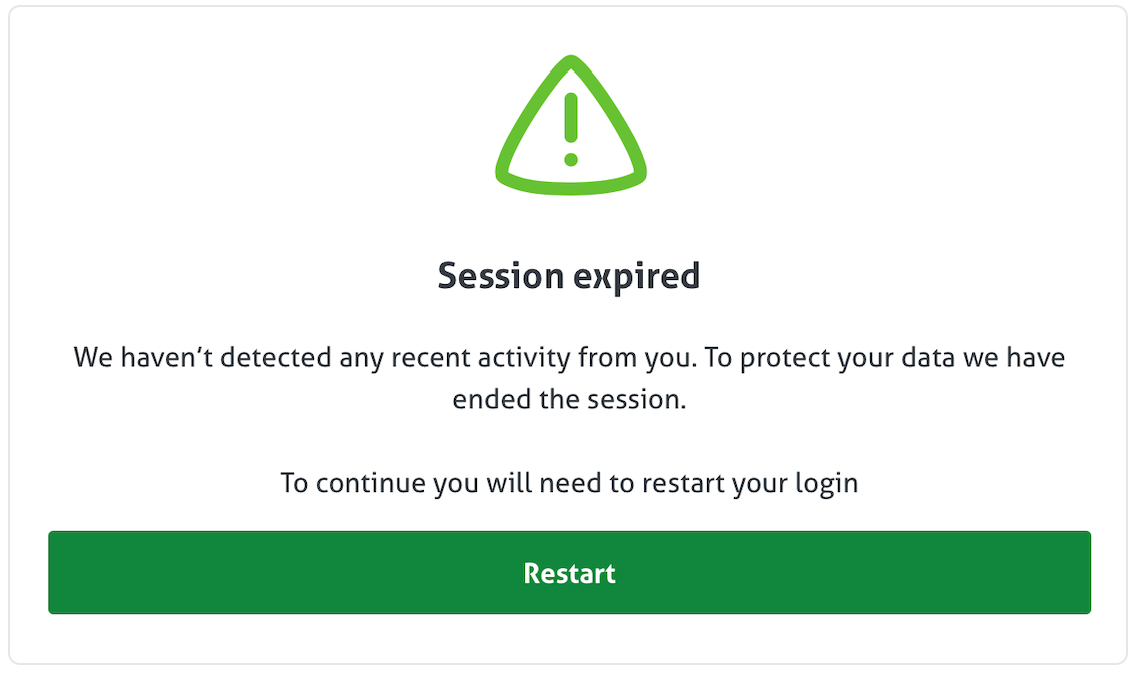
    YBS screen showing session expired and data lost.
    YBS Session Expired – Data Lost

    Here at Storycase we’ve been involved in digital transformation programmes for both the private and public sector. Working with several of industry’s best architects and designers we understand what’s needed to deliver a service that meets the customer’s needs without costing the earth.

    With this lens we’re posting a series of articles to highlight failings we’ve found while using digital services. The intention is to name and shame – not maliciously but to put pressure on organisations to change the way they operate – and to deliver services that work.

    As bank and building society branches close we’ve come to rely on online services and mobile apps for our daily financial transactions. When these do not work as expected we justifiably get annoyed and the stress levels in our daily lives are raised. So what went wrong at YBS when trying to open a joint account and what lessons can we learn?

    Yorkshire Building Society – YBS Joint Account Opening Problems

    As mentioned in our previous post Yorkshire Building Society Design Failings – with increasing inflation rate here in the UK, like many customers with some cash savings we need to open a new YBS account to get a better interest rate. YBS fail to pass on bank base rate increases to existing savers while immediately hiking mortgage rates. Building societies create new account variants that pay a higher interest and fail to pass on rate hikes on older accounts penalising existing customers who fail to act.

    So after less than a year of opening an account we must apply for a new account to chase top rates. It sounds easy – just apply online today! No it’s not that easy at all and here’s why.

    The use case we need is to open a joint account and that’s not been considered a minimum viable product by YBS. While the online form does indeed provide a joint account option, selecting it takes the user down a rabbit hole.

    The form blindly asks for the full details of the joint account holder including a password but does not explain why. And entering all these superfluous details takes time that’s not been allowed so the online session can time out when the customer clicks submit.

    Adding a simple question – Does the joint account holder already have an online account? and if so entry of a username would avoid confusion. But no, the first account holder – they must have an online account in order to apply – is forced to type in the joint holder’s full name, phone numbers, email addresses and passwords that are all unnecessary and so infringe GDPR.

    Bad service design

    Of course the simplest way for existing joint account holders to open a new variant of an existing account eg from a Saver Plus Issue 12 to Saver Plus Issue 13 is to offer an upgrade on the existing account. This enables all account holder to be pre-filled but would be too easy and defeats the real object in YBS creating the new issue in the first place.

    Faced with YBS’s joint account opening form the customer has two options. Neither are good. The first option is to enter the second account holders details including passwords to match the online account that already exists. The second is to give up with opening a joint account and apply to add a second account holder later – which can only be done via post.

    If the second account holder does not have an online account the current form makes more sense but the password should only be set up by the second user at first login to avoid security issues.

    Adding a second account holder is not an online option even for an online only savings account so a paper form must be posted out and returned. With severe postal delays due to Royal Mail strikes and staff shortages here in the UK customers want to avoid post.

    Both journeys will time out if the user does not enter all the information within an unspecified time period or the session will timeout without warning. Clearly no user research or UX has shaped these journeys – I wonder why?

    Clearly it is not in YBS’s financial interest to improve the account opening journey for existing savers – it’s why they created the new account variant in the first place. We complained about the joint account opening experience when it happened a year ago and nothing’s been done. The user journey is still broken.

    Can it get any worse?

    Well, yes it can. After calling YBS customer services and being advised to clear cookies or try another browser and try again (we did neither) we persisted with the joint account user journey.

    Initially it looked successful – the account was opened with an email to both account holders. But the joint account was not visible to the second account holder despite the registration email stating it would be activated overnight.

    It took a further phone call to learn that YBS systems can take up to ten days to merge details and a temporary customer number would be posted out in the meantime. No mention of this online or in the email. Again, the user journey has not been considered.

    Design Failing Summary

    • Account opening form times out without warning – all data entered is lost and customer has to restart the journey.
    • Joint account holder credentials – first applicant forced to enter second account holder’s password
    • No option to use an existing joint account details to open a new account – this would avoid needless data entry.

    Come on YBS – fix your poor online service design or better still, stop the bad practice of spawning new account variants to penalise existing savers.
  • NS&I How did service design go so wrong?

    NS&I How did service design go so wrong?

    NS&I Call Us screen with distraught emoji

    Here in the UK we have National Savings and Investments branded as NS&I which provide popular savings products to the public. NS&I raise revenue for the UK Government and in 2020 delivered £11.6 billion of Net Financing.

    So you would think customer service is top on the director’s agenda to ensure smooth running and secure the income stream from its 25m customers. We’re just one of the customers that have become disillusioned with service and if TrustPilot’s NS&I reviews are representative we’re not alone.

    What’s gone wrong at NS&I?

    Simply, it’s very difficult to speak to an NS&I service advisor anymore. Previously customers picked up the phone or walked into post office to buy Premium Bonds, cash ISAs and Index Linked savings products. As business moved online NS&I moved more of their account opening and management online via their website.

    Poorly designed UX

    Like many organisations that have built businesses using efficient call centres, NS&I decided automation is the way forward. When you try to call NS&I now you are greeted with a voice from a virtual assistant that sounds like a real person. Unfortunately they don’t say they are virtual so the unsuspecting customer may be lead down a series of rabbit holes as they think they are speaking to a human.

    Of course generation Z would likely get they are talking with a virtual assistant immediately as they’d seen the website – but granny or grandpa or generation X may take a little longer to twig. When you do manage to convince the bot they are not up to the task and you need to speak to a real human it all goes wrong. You are told they are experiencing a very high call volume and that the wait time is over 60 minutes. Yes, you heard right, not sixteen, sixty. Do you have over an hour to waste?

    Who ever signed off the IVR contract must have been crazy. We can imagine the meeting. “Okay, so with this new IVR we just spent zillions on we can reduce the call centre staff FTE count by 90% right? And we can do that before the end of Q2 just as we roll out the MVP right? So every one agrees, right.

    Wrong. They failed to think through the service design and volumetrics for the key user journeys. And I bet they failed to consider non-functional requirements, security risk assessment and so on. Here’s why.

    Simple fact – over 25m customers are rich pickings for fraudsters. Not all customers will have or want to use online services no matter how much you want them to. NS&I’s loyal customers got used to picking up the phone and talking to helpful call centre staff. When existing customers call they are told how many of their needs can be handled much faster by visiting the website.

    With call wait times over an hour there’s clearly too few staff to service customers. So why do customers call? In our case we’d tried to register for online or phone service and got an error message about a temporary password that had expired and to call the NS&I help desk.

    So you can see the chicken and egg user journey the fine service designers have set up at NS&I. For clarity, here are some scenarios.

    Scenarios

    Scenario A: Existing customer has no online account and calls NS&I and is persuaded to try online

    Customer calls and IVR tells them it’s much faster online. Customer goes online googles NS&I and follows signage to register. Customer starts registration entering account number and is told their temporary password has expired and to call the help desk. Customer is confused as they don’t remember ever having a temporary password. That’s because either someone else has entered their account number or they tried to register some years ago and gave up. Customer calls and IVR asks why they are calling. Customer says they are having trouble with a temporary password. IVR tells them it’s much faster to reset their password online using the forgotten password option. Customer goes online and clicks the forgotten password option. Customer enters their account number and surname and are shown an error telling them to call the technical help desk on the same number they had called earlier. Customer calls and IVR asks them why they called. Customer says they want the help desk and are told its much faster online. Customer getting angry says they want to speak to help desk IVR says okay, what do you want to speak about. Customer just says put me through to help desk and are told they will be put through. IVR tells them the call wait time is 60 minutes and plays musak.

    And so it goes. It’s woeful customer experience.

    Clearly the user journeys don’t fit the user’s needs. Forgotten passwords must be high on the probability and need an automated solution. The call centre queues are being flooded by requests that don’t need human intervention.

    The problem appears to be a dire inability to design user journeys that work. I bet they only considered true customers. How about this one?

    Scenario B: Fraudster steals letter from NS&I to customer about premium bond win.

    Fraudster steals post, opens letter and finds customer’s name, NS&I account number and details of their premium bond winnings and holder’s number. Lucky fraudster. Fraudster goes to NS&I website and clicks Register online. Fraudster enters account number, name and address from letter and is told to expect a temporary password in the post.

    We could go on but leave the scenario to play out in the reader’s imagination – no point in making it any easier for fraudsters.

    One key underlying problem here is how to authenticate customers given there’s no human interaction. NS&I are not alone in introducing two factor authentication as the traditional username and password is too insecure. NS&I still insist on giving customers a user number that few will every remember so have to write it down somewhere. Why not allow users to choose their own user ID such as a user name they can remember? Why not use OAuth? There are many better ways.